
Introduction: Understanding Overhead Cranes in Modern Industry
An overhead crane represents one of the most critical investments in industrial material handling. Whether you operate a manufacturing facility, warehouse, shipyard, or automotive plant, understanding what an overhead crane is and how it functions can dramatically improve your operational efficiency and workplace safety. According to industry data, facilities that implement overhead crane systems experience productivity improvements of 200-300% compared to manual material handling methods.
This comprehensive guide will walk you through everything you need to know about overhead cranes—from basic definitions and components to advanced selection criteria and maintenance requirements. By the end, you'll have the knowledge to make informed decisions about whether an overhead crane system is right for your facility.
What Is an Overhead Crane: Definition and Core Purpose
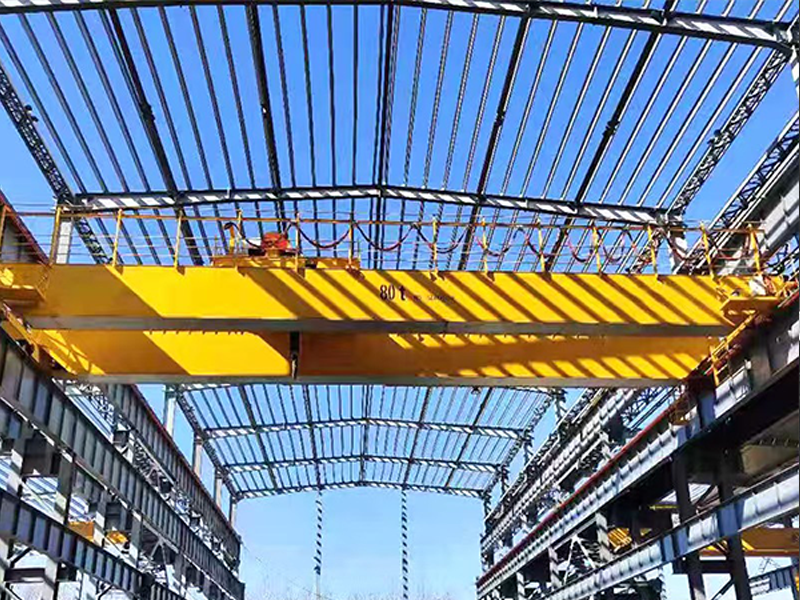
An overhead crane is a mechanical lifting system that moves loads horizontally across the ceiling of a facility using a combination of bridge beams, trolleys, hoists, and runway structures. Unlike floor-based equipment such as forklifts or manual hoists, overhead cranes operate in the overhead space, leaving your floor clear for other operations and personnel.
The fundamental purpose of an overhead crane is to lift, move, and position heavy materials with precision and safety. The system consists of a bridge that travels along fixed runway rails, a trolley that moves perpendicular to the bridge, and a hoist that raises and lowers the load. This three-dimensional movement capability allows operators to place loads exactly where needed with minimal manual intervention.
Key Distinctions from Other Lifting Equipment
Overhead cranes differ fundamentally from other lifting solutions in several important ways. Unlike gantry cranes, which have their own support structure and can move across floors, overhead cranes rely on the building's structural framework. Unlike jib cranes, which have limited reach and are typically used for smaller loads, overhead cranes can span entire bays and handle loads ranging from a few tons to hundreds of tons. Unlike manual hoists or chain falls, overhead cranes provide motorized, controlled lifting with operator controls for precise positioning.
Core Applications and Use Cases
Overhead cranes serve diverse industrial purposes across multiple sectors. In manufacturing facilities, they load and unload materials from trucks, move components between production stations, and position dies in stamping machines. In warehouses and distribution centers, they organize inventory, load shipping containers, and manage heavy pallets. In steel mills and foundries, they handle molten metal and extreme-temperature materials that would be impossible to move manually. In shipyards and automotive plants, they assemble large components and position heavy subassemblies. Each application demonstrates the versatility and essential role overhead cranes play in modern industrial operations.
Why Use Overhead Cranes: Key Benefits and Advantages
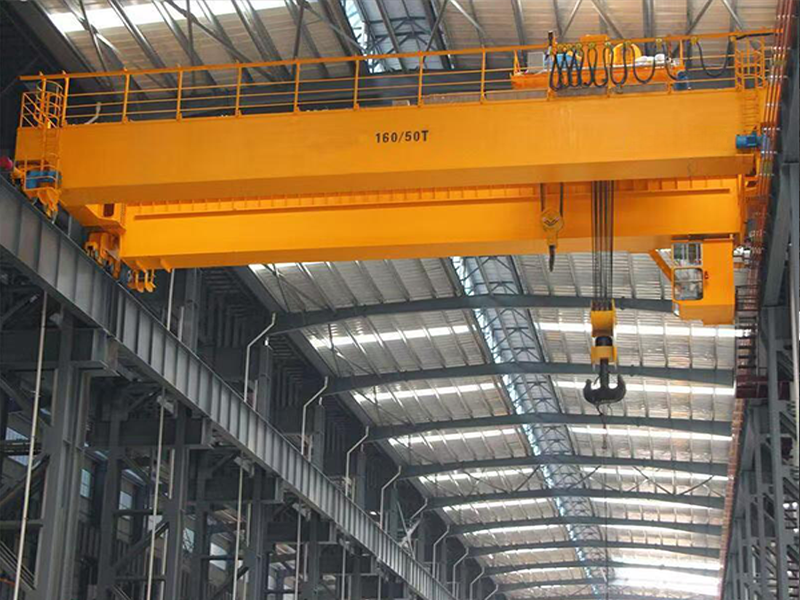
The decision to invest in an overhead crane system offers compelling advantages that extend far beyond simple material movement. Understanding these benefits helps justify the investment and demonstrates the long-term value proposition.
Dramatic Efficiency Improvements
Overhead cranes dramatically accelerate material handling operations. A facility using overhead cranes can move materials 2-3 times faster than using manual labor or floor-based equipment. This speed advantage compounds across thousands of daily operations, resulting in substantial productivity gains. A typical manufacturing facility moving 50 loads per day can save 100+ hours monthly by switching from manual handling to overhead crane systems.
Enhanced Workplace Safety
Safety represents perhaps the most critical advantage of overhead crane systems. By removing workers from direct contact with heavy loads, overhead cranes eliminate crushing injuries, strain injuries, and fatigue-related accidents. The controlled lifting environment reduces product damage, prevents spills of hazardous materials, and protects personnel from extreme temperatures, corrosive chemicals, and other dangerous substances. OSHA data shows that facilities with proper overhead crane systems experience 40-60% fewer material handling injuries.
Optimized Facility Layout
Because overhead cranes operate in the overhead space, they leave floor space completely clear for other operations, personnel movement, and equipment placement. This vertical utilization of space allows facilities to maximize their operational footprint without expanding their physical building. A 10,000 square-foot facility with overhead cranes can often handle the material flow of a 15,000 square-foot facility using floor-based equipment.
Long-Term Cost Reduction
While the initial investment in an overhead crane system is significant, the long-term cost savings are substantial. Reduced labor requirements, fewer injuries and associated costs, minimized product damage, and improved operational efficiency combine to deliver ROI within 2-5 years for most industrial applications. After that payback period, the overhead crane continues generating cost savings for 15-20+ years of operation.
Overhead Crane Components: Complete Parts Breakdown
Understanding the individual components of an overhead crane system is essential for appreciating how these complex machines function and for making informed maintenance and upgrade decisions.
The Bridge: Primary Load-Bearing Structure
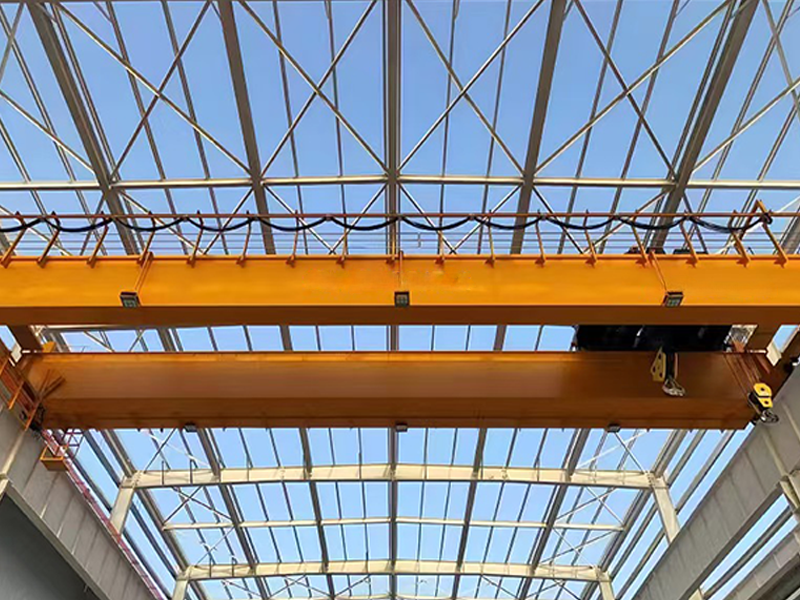
The bridge represents the main horizontal beam that spans the width of your facility. This load-bearing structure carries the trolley and hoist across the facility and must be engineered to handle your specific load requirements. Bridges can be constructed from rolled steel beams or fabricated steel box sections, with the choice depending on load capacity and facility requirements. Single girder bridges use one main beam, while double girder bridges use two parallel beams for greater capacity and stability.
Girders: Support and Strength Components
Girders are the structural members that provide the bridge with its strength and rigidity. They connect to the end trucks and support the trolley as it travels along the bridge. Girder configuration—whether single or double—directly affects the crane's capacity, span capability, and cost. Double girder configurations provide superior load distribution and are typically used for heavier loads and longer spans.
End Trucks: Bridge Movement System
End trucks are wheeled assemblies mounted on each end of the bridge that allow the entire bridge to travel along the runway rails. These trucks contain wheels, bearings, and motors that enable the bridge to move the full length of the runway. End trucks can be powered (motorized) or non-powered (manual), with powered options providing automated movement and precise positioning.
The Hoist: Lifting Mechanism
The hoist is the component that actually lifts and lowers the load. Hoists can be powered by electricity, compressed air (pneumatic), or manual hand operation, with electric hoists being most common in industrial applications. Hoists use either chain or wire rope to lift loads, with chain hoists typically handling lighter loads (under 10 tons) and wire rope hoists handling heavier loads (10 tons and above). The hoist attaches to a hook or specialized lifting attachment that connects to the load.
The Trolley: Horizontal Positioning
The trolley is the wheeled carriage that moves perpendicular to the bridge, positioning the hoist and load side-to-side. The trolley travels along the bridge beam (in underhung configurations) or along rails mounted on top of the bridge (in top-running configurations). The trolley contains the hoist motor, brake mechanism, and control systems that allow precise load positioning.
Runway Structure: Fixed Support Rails
The runway consists of fixed structural beams, typically part of your building's framework, that the end trucks travel along. These runways must be properly aligned and supported to ensure smooth crane operation and load safety. Runway rails, usually ASCE or railroad-style rails, are mounted on the runway beams and provide the actual rolling surface for the end trucks.
Control Systems: Operator Interface
Modern overhead crane systems feature sophisticated control systems that allow operators to manage all crane functions with precision. Pendant controls (wired) provide direct operator control, while radio remote controls offer wireless operation from anywhere within the facility. Advanced systems feature variable frequency drives (VFDs) that allow smooth acceleration and deceleration, reducing shock loads and improving load control.
Power Supply and Electrification
Overhead cranes require reliable power delivery systems to operate. Conductor bars (rigid copper bars mounted along the runway) or festoon systems (flat cables suspended above the runway) deliver electrical power to the moving crane. These electrification systems must be properly installed and maintained to ensure safe, reliable operation.
How Overhead Cranes Work: Operating Principles
Understanding how an overhead crane functions helps operators use the equipment safely and efficiently while also helping facility managers appreciate the engineering complexity involved.
The Three-Dimensional Movement System
Overhead cranes achieve their remarkable versatility through three independent movement systems working in coordination. The bridge moves forward and backward along the runway (longitudinal movement), the trolley moves side-to-side along the bridge (lateral movement), and the hoist lifts and lowers the load (vertical movement). By controlling these three movements independently or in combination, operators can position loads precisely in three-dimensional space.
The Lifting Process: Step-by-Step
When an operator initiates a lift, the hoist motor engages, turning the drum that winds the chain or wire rope around itself. As the rope winds onto the drum, it pulls the hook upward, lifting the attached load. The operator controls the lifting speed through the control system, allowing smooth acceleration to the desired speed and smooth deceleration as the load approaches its destination height. Safety brakes prevent uncontrolled descent if power is lost.
Horizontal Movement and Positioning
Once the load is lifted, the operator can move it horizontally by commanding the bridge and trolley motors. The bridge motor drives the end trucks along the runway, moving the entire bridge forward or backward. Simultaneously, the trolley motor can move the hoist side-to-side along the bridge. This combination allows the operator to move the load to any position within the crane's coverage area.
Load Stability and Anti-Sway Systems
As loads are moved horizontally, they naturally tend to swing or sway, particularly when moving quickly or stopping suddenly. Modern overhead crane systems address this through anti-sway technology that uses variable frequency drives and sophisticated control algorithms to minimize load movement. Some systems include additional mechanical anti-sway devices that further reduce pendulum motion.
Types of Overhead Cranes: Comprehensive Guide
The term "overhead crane" encompasses several distinct configurations, each designed for specific applications and load requirements. Understanding these types helps you select the right system for your facility.
Bridge Cranes: The Standard Industrial Solution
Bridge cranes represent the most common overhead crane configuration. These systems feature a bridge that spans the width of your facility, traveling along runway rails. The bridge carries a trolley that moves perpendicular to the bridge direction, with the hoist suspended from the trolley. Bridge cranes can be configured as single girder or double girder systems, with each configuration offering distinct advantages.
Single girder bridge cranes use one main beam with the trolley running underneath (underhung configuration). These systems are more economical, require less building height, and are easier to install. They work well for light to medium loads (typically under 20 tons) and are commonly found in smaller manufacturing facilities and warehouses.
Double girder bridge cranes use two parallel main beams, providing greater structural strength and load capacity. The trolley can run underneath (underhung) or on top of the beams (top-running). Double girder systems handle heavier loads (20 tons and above), longer spans, and more demanding duty cycles. They're standard in heavy manufacturing, steel mills, and automotive plants.
Gantry Cranes: Freestanding Lifting Systems
Gantry cranes are essentially overhead cranes with their own support structure, eliminating the need for building infrastructure. These systems feature legs that rest on the floor, making them ideal for facilities without suitable overhead structure or for outdoor applications. Gantry cranes offer complete flexibility in placement and can be relocated if facility needs change. They're commonly used in shipyards, construction sites, and outdoor storage areas.
Jib Cranes: Compact Positioning Solutions
Jib cranes feature a horizontal boom (jib) mounted on a vertical mast, allowing 360-degree rotation around the mast. The hoist travels along the jib, providing precise load positioning within a circular coverage area. Jib cranes excel in workstation applications where operators need to position loads at specific work areas. They're often used in assembly lines, maintenance areas, and machine tool stations.
Workstation Cranes: Ergonomic Material Handling
Workstation cranes combine the precision of jib cranes with ergonomic design principles to reduce worker fatigue and injury. These systems are typically lighter duty (under 5 tons) and are designed to position loads at optimal working heights for operators. Workstation cranes improve productivity by reducing the physical strain of material handling.
Monorail Systems: Linear Lifting Solutions
Monorail cranes feature a single rail (monorail) along which the hoist travels. Unlike bridge cranes that provide two-dimensional movement, monorail systems provide movement along a single line. Monorails are ideal for assembly lines and production sequences where loads need to move along a predetermined path. They're often integrated into automated production systems.
Single Girder vs Double Girder: Understanding the Difference
Selecting between single girder and double girder overhead crane configurations represents one of the most important decisions in crane system design. Each configuration offers distinct advantages and limitations.
Structural Design Differences
Single girder systems use one main load-bearing beam, typically with the trolley running on the bottom flange (underhung configuration). This simpler structure reduces material costs and installation complexity. Double girder systems use two parallel main beams, typically with the trolley running on top of the beams (top-running configuration) or underneath both beams. The dual-beam design provides greater structural rigidity and load distribution.
Load Capacity Comparison
Single girder cranes typically handle loads up to 20 tons effectively, though some specialized designs reach 30 tons. Double girder cranes routinely handle loads of 50, 100, or even 300+ tons. The dual-beam structure distributes loads more evenly and allows for greater span lengths without excessive deflection. For applications requiring heavy lifting, double girder systems are often the only practical option.
Span and Clearance Considerations
Single girder systems require less overhead clearance because the trolley runs underneath the beam. This makes them ideal for facilities with limited building height. Double girder systems, particularly top-running configurations, require more clearance but provide superior load stability and can span longer distances (up to 100+ feet) without excessive deflection.
Cost Analysis
Single girder systems cost significantly less—typically 30-40% less than comparable double girder systems. This lower cost includes the crane itself, structural modifications, and installation. However, the cost difference must be weighed against the application requirements. Choosing an undersized single girder system that cannot handle your actual loads is a false economy
Duty Cycle Implications
Single girder cranes are suitable for light to medium duty cycles (Class A: occasional use, Class B: moderate use). Double girder cranes handle heavy duty cycles (Class C: frequent use, Class D: continuous use). If your facility requires frequent lifting throughout the day, a double girder system will provide better reliability and longer service life.
Overhead Crane Capacity and Load Limits
Understanding overhead crane capacity is essential for safe operation and for selecting the right system for your facility's needs.
Working Load Limit (WLL) Definition
The Working Load Limit (WLL) represents the maximum weight an overhead crane can safely lift under normal operating conditions. This limit is established through engineering calculations that consider the crane's structural strength, hoist capacity, and safety factors. The WLL is typically marked on the crane and should never be exceeded.
Capacity Rating Systems
Overhead cranes are rated according to the CMAA (Crane Manufacturers Association of America) classification system, which considers both the load capacity and the duty cycle. A 10-ton crane rated for Class C duty can handle 10-ton loads frequently throughout the day. The same 10-ton crane rated for Class A duty is designed for only occasional lifting and should not be used for frequent heavy loads.
Safety Factors and Design Margins
Overhead crane capacity ratings include built-in safety factors that provide a margin between the rated capacity and the actual structural limits. These safety factors account for dynamic loads, shock loads, and other stresses that occur during real-world operation. Never exceed the rated capacity, as doing so eliminates the safety margin and risks catastrophic failure.
Calculating Actual Load Weight
Accurately determining the weight of loads to be lifted is critical for safe crane operation. Many accidents occur because operators underestimate load weight and exceed the crane's capacity. Loads should be weighed on scales when possible, or calculated using material density and dimensions. When in doubt, consult with your crane manufacturer or a qualified lifting engineer.
Overhead Crane Safety Standards and Compliance
Operating an overhead crane safely requires adherence to strict regulatory standards and best practices established by industry organizations and government agencies.
OSHA Requirements
The Occupational Safety and Health Administration (OSHA) establishes mandatory requirements for overhead crane operation, maintenance, and inspection. OSHA regulations require that overhead cranes be inspected before initial use, regularly inspected during operation, and thoroughly inspected annually. Operators must be trained and competent, and all lifting operations must be planned and supervised by qualified personnel.
ASME Standards
The American Society of Mechanical Engineers (ASME) publishes technical standards for overhead crane design, manufacturing, and operation. ASME B30.2 specifically addresses overhead and gantry cranes and provides detailed requirements for safe operation, maintenance, and inspection. Many facilities adopt ASME standards as their operational guidelines.
CMAA Guidelines
The Crane Manufacturers Association of America (CMAA) publishes specifications for overhead crane design and classification. CMAA classifications help facility managers select cranes appropriate for their duty cycles and load requirements. CMAA standards also establish inspection and maintenance intervals.
Inspection Requirements
Overhead cranes must be inspected at multiple intervals: before initial use, before each use, periodically during operation (typically monthly or quarterly), and annually by a qualified inspector. These inspections verify that all components function properly, that no damage or wear has occurred, and that the crane remains safe for operation. Documentation of all inspections must be maintained.
Operator Training and Certification
OSHA requires that overhead crane operators be trained and competent. Many facilities require formal certification through recognized training programs. Operators must understand crane controls, load limits, safety procedures, and emergency protocols. Regular refresher training ensures that operators maintain competency throughout their careers.
Overhead Crane Applications and Industries
Overhead cranes serve critical functions across diverse industrial sectors, each with unique requirements and challenges.
Manufacturing and Assembly Facilities
Manufacturing plants use overhead cranes extensively for moving raw materials, positioning components during assembly, and loading finished products. Automotive manufacturers use overhead cranes to position heavy subassemblies, engine blocks, and transmissions. Appliance manufacturers use them to move components between production stations. The precision and reliability of overhead cranes are essential to maintaining production schedules and quality standards.
Warehousing and Distribution Centers
Distribution centers and warehouses use overhead cranes to organize inventory, load shipping containers, and manage heavy pallets. The efficiency of overhead cranes allows warehouses to handle higher volumes with fewer personnel. Modern warehouse management systems often integrate with overhead crane controls to automate material movement and improve inventory accuracy.
Steel Mills and Foundries
Steel mills and foundries represent some of the most demanding applications for overhead cranes. These facilities use cranes to handle molten metal, extreme-temperature materials, and massive loads. The reliability and durability of overhead cranes in these harsh environments are critical to operational safety and efficiency.
Shipyards and Maritime Facilities
Shipyards use overhead cranes to position massive ship sections, engine blocks, and other heavy components during construction. The precision required for shipbuilding makes overhead cranes indispensable. Some shipyard cranes handle loads exceeding 500 tons.
Automotive Manufacturing
Automotive plants use overhead cranes throughout their facilities—from receiving areas where raw materials arrive, through production lines where components are positioned, to shipping areas where finished vehicles are loaded. The high-speed, high-volume nature of automotive manufacturing demands reliable, efficient overhead crane systems.
Other Industrial Applications
Overhead cranes serve countless other applications: printing facilities moving large paper rolls, textile mills handling heavy fabric rolls, food processing plants moving bulk ingredients, pharmaceutical facilities handling equipment, and many others. The versatility of overhead cranes makes them suitable for virtually any industrial material handling application.
Overhead Crane Maintenance and Inspection
Proper maintenance and inspection of your overhead crane system is essential for safe, reliable operation and for extending the system's service life.
Preventive Maintenance Programs
Developing a comprehensive preventive maintenance program helps identify and address potential problems before they become serious issues. Maintenance should include regular lubrication of moving parts, inspection of fasteners for looseness, checking electrical connections, testing brakes and controls, and inspecting structural components for corrosion or damage. A well-maintained crane operates more safely and reliably than one that receives only reactive maintenance.
Inspection Frequency Requirements
OSHA and ASME standards establish minimum inspection frequencies. Before-use inspections should occur before each shift. Regular inspections should occur monthly or quarterly depending on duty cycle. Annual inspections by qualified personnel should be comprehensive and thoroughly documented. High-duty-cycle cranes may require more frequent inspections.
Common Maintenance Issues
Typical maintenance issues include worn hoist brakes, frayed wire rope, corroded structural members, loose fasteners, and worn trolley wheels. Many of these issues can be prevented through regular maintenance. When issues are identified, they should be addressed promptly to prevent escalation into serious problems.
Maintenance Cost Estimation
Annual maintenance costs typically run 5-10% of the original crane cost for light-duty systems and 10-15% for heavy-duty systems. These costs include routine maintenance, parts replacement, and annual inspections. While maintenance costs are significant, they're substantially less than the cost of crane downtime or the catastrophic costs of a crane failure.
Choosing the Right Overhead Crane for Your Facility
Selecting an overhead crane system that matches your facility's requirements is a critical decision that affects productivity, safety, and long-term costs.
Assessing Your Facility's Needs
Begin by thoroughly analyzing your material handling requirements. What loads do you need to move? How frequently? What distances? What precision is required? What environmental conditions exist (temperature, humidity, corrosive materials)? Document these requirements in detail, as they form the foundation for all subsequent decisions.
Capacity Requirements
Determine the maximum load weight you need to lift, then add a safety margin (typically 20-30% above your maximum anticipated load). Consider not just current requirements but also anticipated future needs. Undersizing your crane system creates bottlenecks and safety risks, while oversizing increases costs unnecessarily.
Span and Coverage Area
Measure the area that needs to be covered by your crane system. Longer spans require more robust (and more expensive) structural systems. Consider whether a single crane or multiple cranes would better serve your facility. Sometimes multiple smaller cranes are more cost-effective and flexible than one large crane.
Duty Cycle Classification
Honestly assess how frequently your crane will be used. Light-duty applications (occasional use) can use simpler, less expensive systems. Heavy-duty applications (continuous use) require more robust systems designed for frequent operation. Selecting a light-duty crane for heavy-duty application leads to premature failure and safety risks.
Building Structure Evaluation
Have your building structure evaluated by a qualified engineer to determine whether it can support the overhead crane system you're considering. Some facilities require structural reinforcement before crane installation. Understanding these requirements early prevents costly surprises during installation.
Budget Considerations
Establish a realistic budget that includes not just the crane itself but also structural modifications, installation, operator training, and initial maintenance. While cost is important, selecting the lowest-cost option that doesn't meet your actual requirements is ultimately more expensive than investing in the right system initially.
Vendor Selection
Choose crane vendors carefully. Look for manufacturers with strong reputations, proven track records in your industry, and excellent customer support. Request references from other facilities using similar systems. Evaluate not just the equipment cost but also the vendor's ability to provide ongoing support, spare parts, and maintenance services.
Conclusion: Making the Right Investment in Overhead Crane Technology
An overhead crane system represents a significant investment in your facility's infrastructure, but one that typically delivers compelling returns through improved productivity, enhanced safety, and reduced long-term costs. By understanding what overhead cranes are, how they function, what types are available, and how to select and maintain them, you're equipped to make informed decisions that will serve your facility well for decades.
Whether you're operating a small manufacturing facility, a large distribution center, or a heavy industrial plant, overhead cranes offer solutions that improve efficiency, protect your workforce, and optimize your facility's operational capabilities. The key is selecting the right system for your specific needs and maintaining it properly throughout its service life.
Ready to explore overhead crane solutions for your facility? Our team of lifting specialists can evaluate your specific requirements and recommend the optimal crane system for your needs. We offer comprehensive solutions including system design, installation, operator training, and ongoing maintenance support. Contact us today for a free consultation and facility assessment. We're here to help you find the perfect overhead crane solution that maximizes your productivity while keeping your team safe.