
What is the Difference Between Gantry Crane and Overhead Crane?
Introduction
In the realm of heavy lifting and material handling, cranes are indispensable tools that facilitate the movement of heavy loads across various industrial settings. Among the most common types are gantry cranes and overhead cranes, often referred to as bridge cranes. While both serve the fundamental purpose of lifting and transporting materials, they possess distinct structural designs, operational characteristics, and application suitability. Understanding these differences is crucial for businesses to select the most appropriate and cost-effective lifting solution for their specific needs [1]. This article will delve into a comprehensive comparison of gantry cranes and overhead cranes, highlighting their unique features, advantages, disadvantages, and ideal applications.
Structural Differences
The primary distinction between gantry cranes and overhead cranes lies in their structural support and mobility. Both utilize a hoist and trolley system that runs along a horizontal beam, known as a girder or bridge, to lift and move loads. However, their methods of supporting this girder differ significantly.
Overhead Cranes (Bridge Cranes)
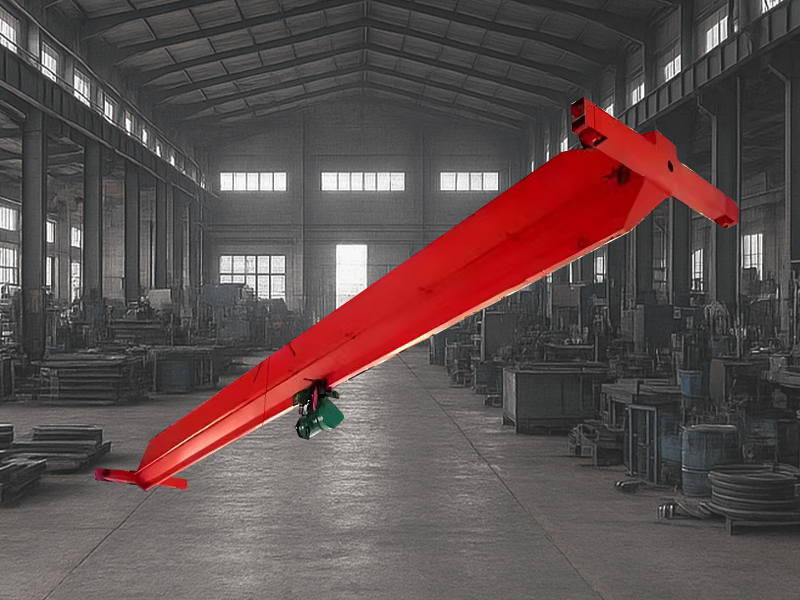
Overhead cranes, also known as bridge cranes, are characterized by their permanent installation within a facility. They consist of a horizontal bridge that spans the width of the workspace, supported by two parallel runways. These runways are typically mounted on the building's support columns or a dedicated freestanding steel structure [2]. The bridge, carrying the hoist and trolley, travels along these runways, allowing for movement across the entire length and width of the designated area. This design provides exceptional stability and lifting capacity, making them suitable for heavy-duty, repetitive lifting tasks within a fixed operational footprint.
Gantry Cranes
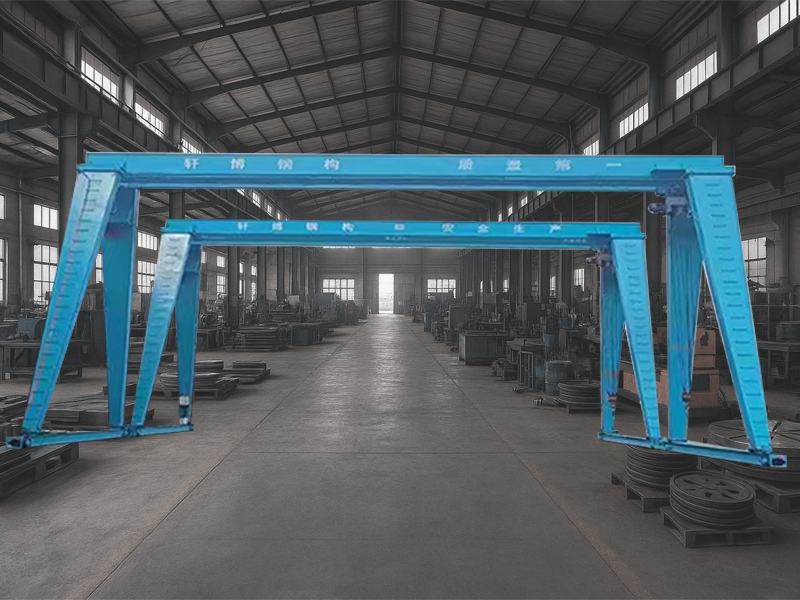
Gantry cranes, in contrast, are self-supported by vertical legs that run on wheels or a track system on the floor level [3]. This eliminates the need for permanent building support structures, offering greater flexibility in terms of installation and relocation. Gantry cranes can be categorized into various types, including full gantry, semi-gantry, portable gantry (on casters), and rail-mounted gantry cranes. The vertical legs support the horizontal girder, which houses the hoist and trolley. This design allows gantry cranes to operate both indoors and outdoors, making them highly versatile for diverse environments.
Comparison of Key Aspects
To further elucidate the differences, let's examine several key aspects:
Feature | Overhead Crane (Bridge Crane) | Gantry Crane |
Support Structure | Bridge supported by runways mounted on building columns or dedicated steel structure. | Self-supported by vertical legs running on wheels or tracks on the floor. |
Mobility | Fixed installation, moves along fixed runways within the building. | Can be portable (on casters) or rail-mounted, offering greater flexibility in movement and location. |
Installation | Requires significant structural modifications to the building or a dedicated support system. | Less dependent on building structure; easier and quicker to install or relocate. |
Operational Environment | Primarily indoor applications, within a defined workspace. | Both indoor and outdoor applications, suitable for yards, docks, and large open areas. |
Space Utilization | Maximizes floor space as support structure is overhead. | Requires floor space for legs and travel path; can be less efficient for floor space in some configurations. |
Lifting Capacity | Generally higher lifting capacities and greater stability for heavy, repetitive loads. | Can handle substantial loads, but typically less than the heaviest overhead cranes; portable versions have limited capacity. |
Cost | Higher initial installation cost due to structural requirements. | Generally lower initial cost, especially for portable models; overall cost-effectiveness depends on application. |
Maintenance | More complex maintenance due to overhead components and more moving parts. | Simpler maintenance, especially for portable units; components are more accessible. |
Headroom | Requires sufficient headroom for overhead runways and bridge. | Can be designed for lower headroom applications, especially under-running types. |
Applications
Overhead Crane Applications
Overhead cranes are ideal for environments where consistent, heavy lifting is required over a fixed area. Common applications include:
• Manufacturing Facilities: Moving raw materials, work-in-progress, and finished goods along production lines.
• Steel Mills and Foundries: Handling heavy metal slabs, coils, and molten metal [4].
• Warehouses and Distribution Centers: Efficiently loading, unloading, and stacking heavy inventory.
• Assembly Plants: Precision placement of large components during assembly processes.
Gantry Crane Applications
Gantry cranes excel in situations demanding flexibility and mobility, particularly in outdoor or large, open indoor spaces. Typical applications include:
• Shipyards and Ports: Loading and unloading cargo from ships and moving large containers [5].
• Construction Sites: Lifting and positioning heavy construction materials like precast concrete or steel beams.
• Rail Yards: Handling intermodal containers.
• Outdoor Storage Yards: Moving heavy equipment and materials in open-air environments.
• Workshops with limited overhead structure: Providing lifting capabilities without extensive building modifications.
Choosing the Right Crane
The decision between a gantry crane and an overhead crane hinges on several critical factors:
• Facility Structure: Does your building have the structural integrity to support overhead runways, or is a floor-supported system more feasible?
• Operational Area: Is the lifting confined to a specific indoor area, or do you require flexibility across a larger, potentially outdoor, space?
• Lifting Capacity and Frequency: How heavy are the loads, and how often will they be lifted? Overhead cranes generally offer higher capacities for continuous, heavy-duty cycles.
• Budget: Consider both initial installation costs and long-term maintenance expenses. Gantry cranes often have lower upfront costs, but operational efficiency over time can vary.
• Future Expansion: If your operations are likely to change or expand, the portability of gantry cranes might be a significant advantage.
Consulting with a crane expert is highly recommended to assess your specific needs and ensure compliance with safety regulations [2].
Conclusion
Both gantry cranes and overhead cranes are powerful and efficient lifting solutions, each with unique strengths tailored to different industrial demands. Overhead cranes, with their fixed overhead support, offer robust, high-capacity lifting within defined indoor spaces, maximizing floor utility. Gantry cranes, with their self-supporting legs and floor-level mobility, provide unparalleled flexibility for both indoor and outdoor applications, often at a lower initial installation cost. By carefully evaluating your operational requirements, facility constraints, and budget, you can make an informed decision that optimizes your material handling processes and enhances overall productivity.